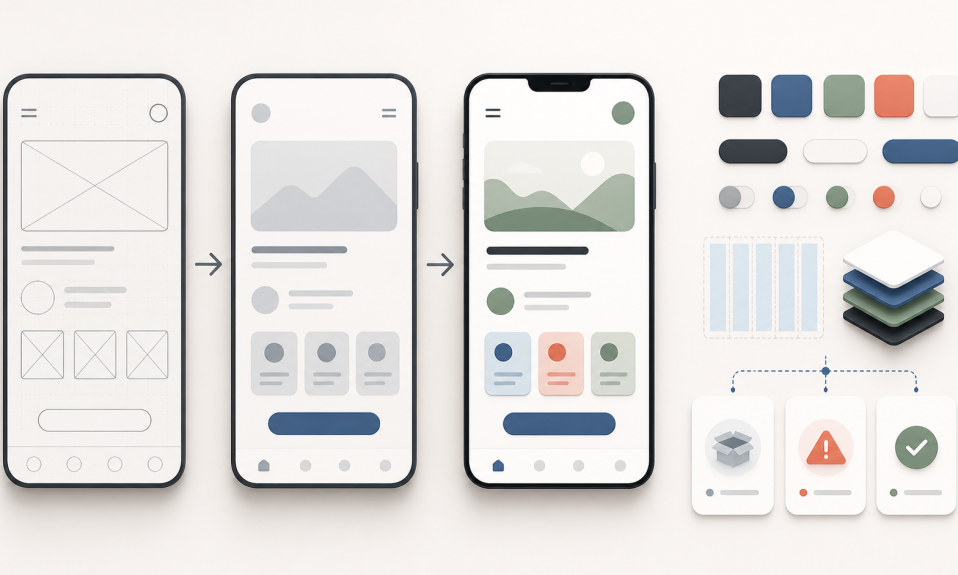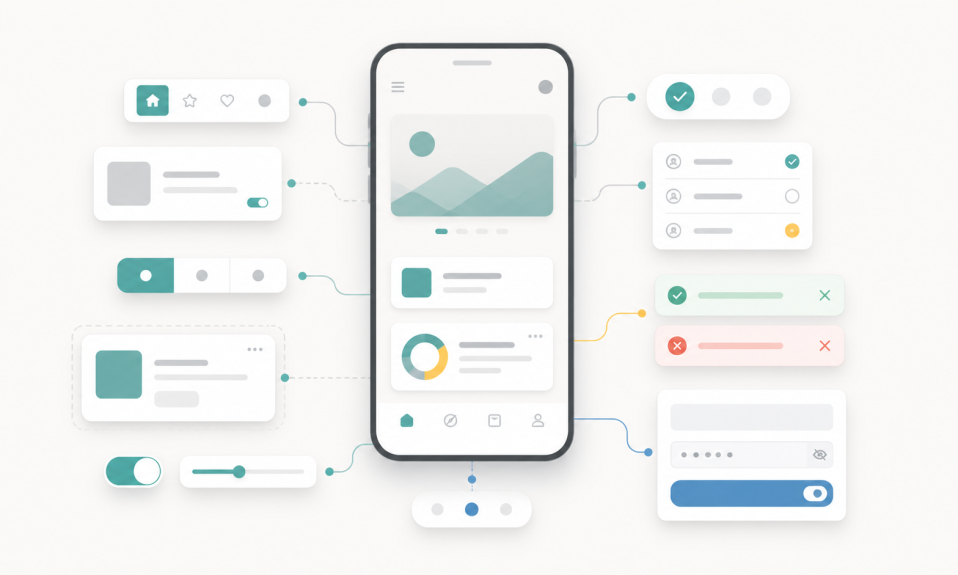

A practical guide for students who want to study graphic design today, covering portfolio, UI/UX, product design, AI tools, career paths, and what the creative industry expects.
Graphic design is still a strong field.
But it is not the same field many people imagine from the outside.
If you want to study graphic design today, you should not think only about posters, logos, or learning design software.
Those things are still important.
But the creative industry now expects more from designers.
A designer may work on brand identity, social media content, websites, mobile apps, product interfaces, presentations, motion content, design systems, or AI-assisted visual workflows.
So the real question is not only:
Should I study graphic design?
The better question is:
What kind of designer do I want to become after learning the basics?
Graphic design is not only one path anymore
Graphic design used to be easier to describe.
Print design, posters, magazines, brochures, packaging, logos, and brand identity were the main examples.
These areas still exist.
Good typography, layout, color, and visual hierarchy still matter a lot.
But today, a graphic design student can move into many different paths:
- Brand identity design
- Social media and content design
- Website design
- Mobile app UI design
- UX design
- Product design
- Motion design
- Packaging design
- Editorial design
- AI-assisted creative production
This is good news.
It means the field is wider.
But it also means students need to be more intentional.
University gives the foundation, but the portfolio opens the door
A design degree can give you a strong foundation.
You can learn typography, composition, color, visual culture, art history, printing, layout, and design thinking.
These are not small things.
They train your eye.
But the industry will also ask a very simple question:
What did you make?
Your portfolio becomes very important.
Not only because it shows your final visuals, but because it shows your taste, your thinking, your effort, and your direction.
If you are a student, do not wait until graduation to build a portfolio.
Start early.
Small projects are enough in the beginning.
A brand identity concept, a poster series, a mobile app flow, a landing page, a packaging idea, or a social campaign can all become portfolio material.
Software skills are useful, but they are not the whole job
Photoshop, Illustrator, InDesign, Figma, After Effects, Blender, or other tools can help you create work faster.
But knowing software is not the same as being a good designer.
Tools change.
Design judgment stays.
A strong designer should understand:
- Visual hierarchy
- Typography
- Spacing
- Color contrast
- Composition
- Audience and context
- Clear communication
- Why a design decision makes sense
Anyone can learn where a button is in a program.
But not everyone can decide what the design needs.
That is where your value grows.
UI/UX and product design are strong opportunities
For graphic design students, UI/UX and product design can be very good career directions.
Graphic design gives you visual discipline.
UI/UX adds user flow, usability, product thinking, and interaction.
This combination can be powerful.
If you are interested in digital products, you can learn how to design:
- Mobile app screens
- Website interfaces
- SaaS dashboards
- Onboarding flows
- Forms and checkout flows
- Design systems
- Prototypes and user flows
But UI/UX is not only making screens look modern.
You need to understand the user problem, the flow, the states, the errors, and the goal of the product.
I wrote a beginner-friendly Turkish guide about this topic here: UX Tasarıma Yeni Başlayanlar İçin Basit Bir Yol Haritası.
I also wrote about why Figma alone is not enough here: UI/UX Tasarımcı Olmak İçin Figma Bilmek Yeterli mi?.
AI tools will change the workflow, not remove the need for taste
AI tools are now part of the creative industry.
They can help with moodboards, image ideas, copy, layout exploration, presentation drafts, quick UI ideas, and visual production.
Some students may feel afraid of this.
Will AI replace designers?
I do not think this is the useful question.
The better question is:
Can you use AI with good taste and clear direction?
AI can create options.
But you still need to choose, edit, guide, and judge.
A weak designer may produce more weak work with AI.
A strong designer can use AI to move faster.
So students should not ignore AI tools.
But they should not give all creative decisions to AI either.
Use AI as a helper, not as your brain.
The portfolio should show more than final visuals
A common student mistake is showing only beautiful final images.
Final visuals are important.
But a strong portfolio also shows thinking.
Try to explain:
- What was the problem?
- Who was the audience?
- What was your role?
- What did you try first?
- What changed during the process?
- Why did you make the final decision?
This matters even more if you want to move into UI/UX or product design.
People want to see how you think, not only what you exported.
I wrote more about this here: UI/UX Portfolio Mistakes Junior Designers Should Avoid.
Do not try to become every type of designer at once
Graphic design students often want to try everything.
This is normal.
Branding, posters, packaging, social media, UI, motion, 3D, illustration, AI tools.
Exploring is good.
But after some time, focus becomes important.
You may choose a direction like:
- I want to focus on brand identity.
- I want to move into UI/UX and digital products.
- I want to become strong in motion and content design.
- I want to work on packaging and editorial design.
- I want to design SaaS dashboards and product systems.
This does not limit you.
It makes your portfolio clearer.
It also helps people understand where you can bring value.
I wrote about specialization here: UI/UX Kariyerinde Bir Alanda Uzmanlaşmak.
What the industry may expect from you
The creative industry can be exciting, but it is not always easy.
You may need to handle feedback, revisions, deadlines, client expectations, trends, presentations, and new tools.
You may also need to explain your decisions.
This is very important.
Design is not only making something look good.
Design is also communication.
You should learn how to say:
This is why I used this layout.
This is why the button is here.
This is why this typography works better.
This is why this flow is easier for the user.
When you can explain your design, you become more professional.
What I would do as a student
If I were starting graphic design today, I would do this:
- Take typography and composition seriously.
- Build a small portfolio from the first year.
- Learn the main design tools, but do not worship tools.
- Study good work and write why it works.
- Try UI/UX, branding, motion, and content design early.
- Pick one direction to go deeper after exploring.
- Learn how AI tools can support the workflow.
- Share work regularly on a personal site or portfolio platform.
- Learn to present design decisions clearly.
This is not a magic plan.
But it is a strong start.
My takeaway
Studying graphic design can still be a very good decision.
But students should enter the field with open eyes.
The modern designer is not only a software user.
The modern designer thinks about visuals, users, products, content, tools, and systems.
If you study graphic design, learn the fundamentals seriously.
Build your portfolio early.
Explore different paths.
Use AI tools wisely.
Then choose a direction and go deeper.
That is how graphic design education can become a real career advantage.
If you are interested in more career-focused design posts, you can check my UI/UX, Product Design, Growth, Technology, and AI categories.